A Himalayan kingdom that measures success by more than growth.
Bhutan sits high in the eastern Himalaya: a country of forested valleys, fortress monasteries, and the
world's only carbon-negative economy. It opened to visitors slowly and on its own terms, and it still
travels at the pace of the place rather than the crowd.
History and background
Unified late, modernised on its own terms.
Bhutan was unified in the 17th century by Zhabdrung Ngawang Namgyel, who left the dzongs, the great
fortress-monasteries that still anchor each valley. A hereditary monarchy was established in 1907, and the
country moved to a constitutional monarchy with its first national elections in 2008.
Vajrayana Buddhism shapes daily life, the calendar, and the festivals. Development is guided by Gross
National Happiness, a national philosophy that weighs wellbeing, culture, and the environment alongside
economic growth. More than seventy per cent of the country stays under forest by constitutional mandate.
How Bhutan welcomes visitors
High Value, Low Volume: fewer travellers, deeper experiences.
Bhutan chooses quality over quantity. Rather than open the gates to mass tourism, it asks each visitor to
contribute through a Sustainable Development Fee and to travel with a licensed guide. The result is quieter
trails, protected culture, and revenue that funds free healthcare, education, and conservation. The framework
sits under the Tourism Levy Act 2022 and the Tourism Rules and Regulations 2024, administered by the
Department of Tourism.
Before you travel
The essentials, in plain terms.
The Sustainable Development Fee
International visitors pay a Sustainable Development Fee of USD 100 per person per night, a reduced rate
currently set to 31 August 2027. Indian nationals pay INR 1,200. Children aged 6 to 12 pay half, and
under-6s are exempt. It is collected through your operator, not on arrival, and it funds the country's free
healthcare, education, and conservation.
Visa and entry
Most visitors need a visa (USD 40) arranged in advance, before booking flights; nationals of India,
Bangladesh, and the Maldives are exempt. Your operator handles the visa, the fee, and the paperwork as part
of the journey.
Guides and getting around
Every visitor travels with a licensed Bhutanese guide, and self-driving is not permitted, so transport is
by local vehicle and driver. Some regions, such as Laya, Merak, and Sakteng, need special permits. It keeps
travel safe, cultural, and simple to plan.
The kingdom in depth
Bhutan: the longer story.
From an 8th-century Buddhist arrival to a 21st-century democracy chosen from the throne, here is how the
kingdom came to be, and why it travels the way it does.
Land and name
Bhutan calls itself Druk Yul, the Land of the Thunder Dragon. It is a small, landlocked country of about
38,400 square kilometres in the eastern Himalaya, bordered by the Tibetan plateau of China to the north and
India to the south, east, and west. The land climbs from subtropical plains near 200 metres to peaks above
7,000 metres; its highest summit, Gangkhar Puensum at 7,570 metres, is the highest unclimbed mountain on
Earth. Around 790,000 people live here, most in the western and central valleys, with Thimphu as the capital.
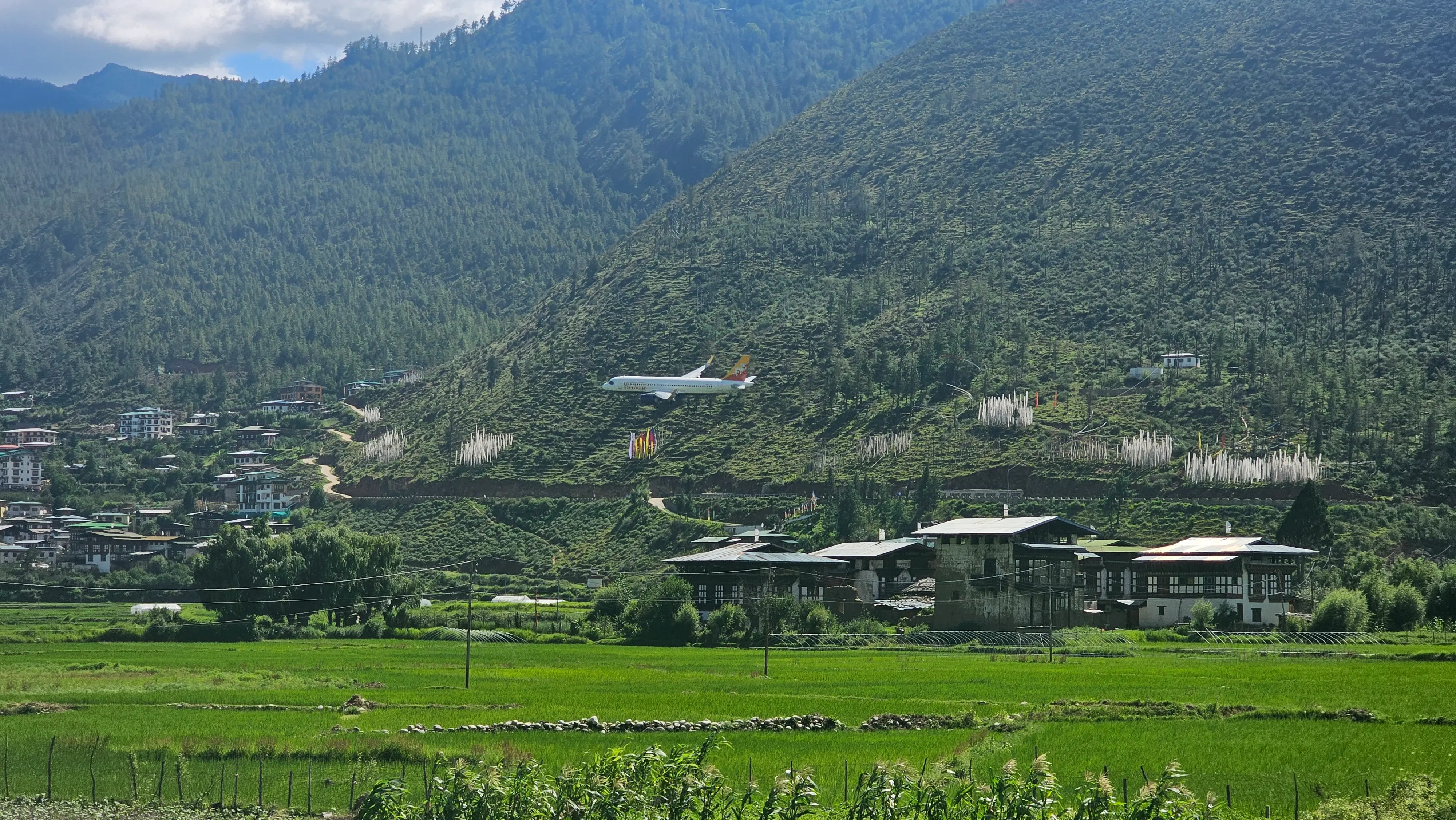
The Paro valley, on the approach to Bhutan's only international airport.
Faith and the first temples
Buddhism reached Bhutan in the 8th century, most famously through Guru Rinpoche (Padmasambhava), who by
tradition flew to the cliff site of Paro Taktsang, the Tiger's Nest. Over the centuries the Drukpa Kagyu
school of Vajrayana Buddhism became the country's defining tradition. Its monasteries and fortress-temples,
the dzongs, still anchor daily life, the calendar, and the great masked festivals.
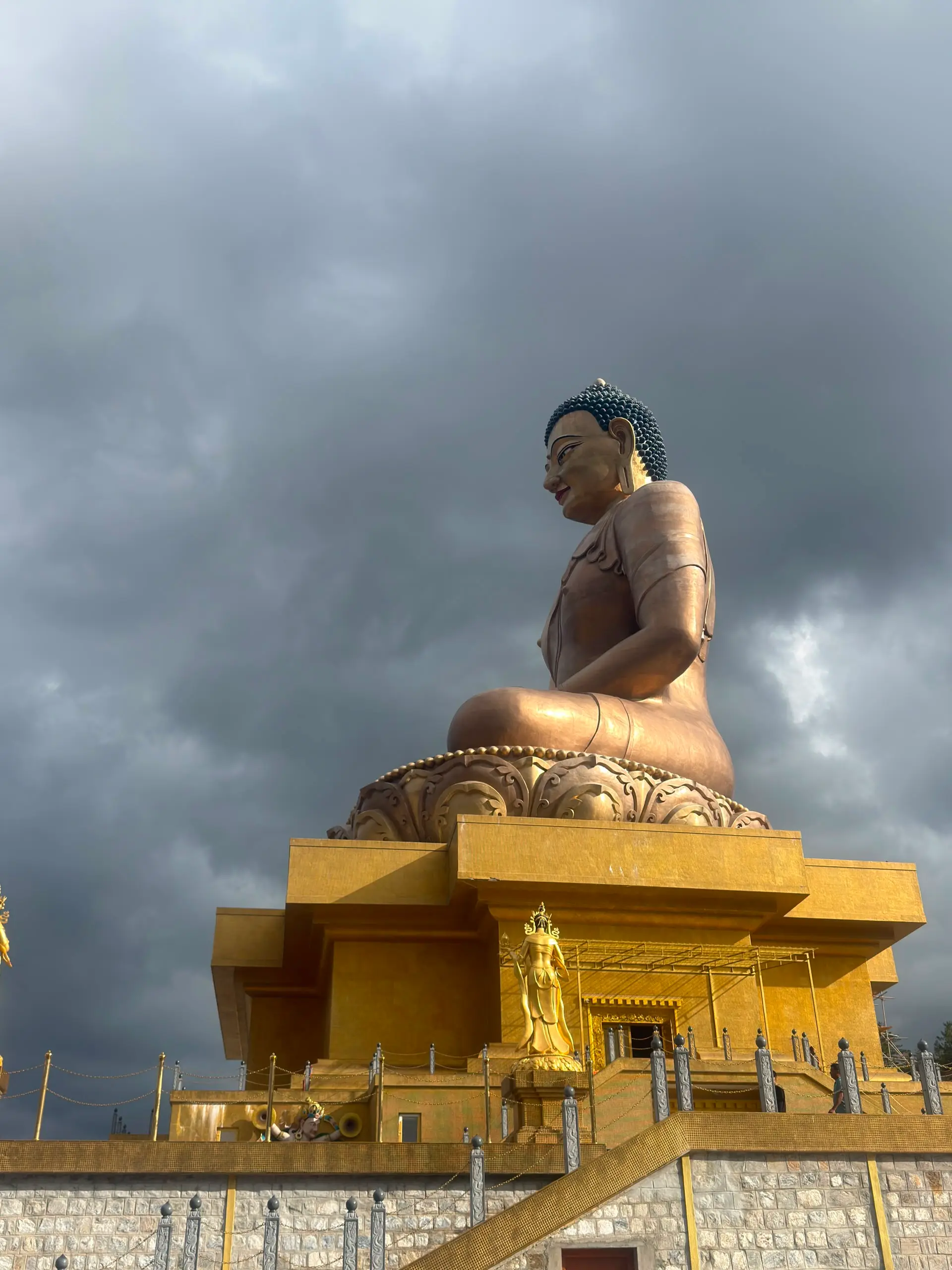
The Great Buddha Dordenma, watching over Thimphu.
The unification
In 1616 a lama from Tibet, Zhabdrung Ngawang Namgyal, united the valleys into a single state. He repelled
repeated Tibetan invasions, built the network of dzongs, and codified Bhutan's first legal system, the
Tsa Yig. He left a dual system of government, the chhoe-sid, splitting authority between a civil ruler (the
Druk Desi) and a spiritual head (the Je Khenpo). After his death the country slipped into two centuries of
rivalry between regional governors.
The birth of the monarchy
The fragmentation ended with Ugyen Wangchuck, the powerful governor of Trongsa, whose victories, including
the decisive Battle of Changlimithang, made him the leading figure in the land. On 17 December 1907 an
assembly of monks, officials, and family heads crowned him the first hereditary Druk Gyalpo, the Dragon King.
That date is still marked as Bhutan's National Day, and the Wangchuck dynasty has reigned since.
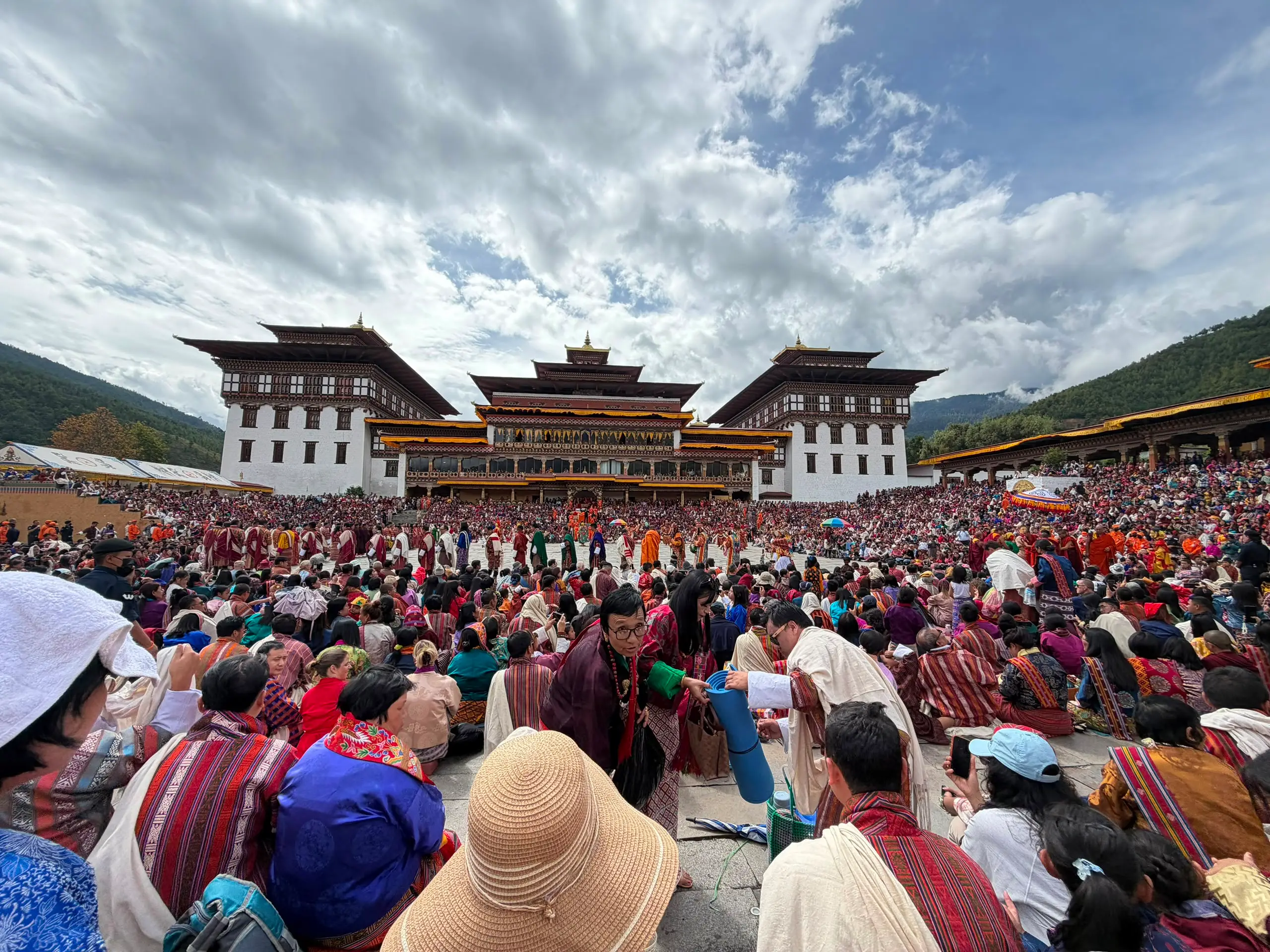
Tashichho Dzong in Thimphu, seat of government, during the tshechu.
The father of modern Bhutan
The third king, Jigme Dorji Wangchuck (reigned 1952 to 1972), is remembered as the father of modern Bhutan.
He opened the country carefully to the world, built its first roads, abolished serfdom and slavery, founded
the Royal Bhutan Army and the courts, and led Bhutan into the United Nations in 1971, all while insisting
that language, dress, and architecture be preserved.
Gross National Happiness
In 1972 the fourth king, Jigme Singye Wangchuck, gave the country its most famous idea: that progress should
be measured by Gross National Happiness, not by economic output alone. GNH rests on four pillars, good
governance, sustainable development, cultural preservation, and environmental conservation, and is assessed
across nine domains of wellbeing. It remains the philosophy written into national policy.
A kingdom that chose democracy
In an unusual move, the fourth king voluntarily handed power to his son and set Bhutan on the path to
democracy. His successor, the fifth and current king, Jigme Khesar Namgyel Wangchuck, oversaw the enactment
of Bhutan's written Constitution on 18 July 2008 and the country's first national elections, turning an
absolute monarchy into a constitutional one by royal choice rather than revolt.
Bhutan today
Bhutan is the world's only carbon-negative country: its forests, protected by a constitutional floor of
sixty per cent cover (in practice over seventy), absorb more carbon than the nation emits. Clean hydropower
is the largest source of revenue, Vajrayana Buddhism shapes ordinary days, and most Bhutanese still wear the
national dress, the gho and the kira. Tourism is kept deliberately high in value and low in volume, so the
country you visit is the one Bhutanese have chosen to protect.
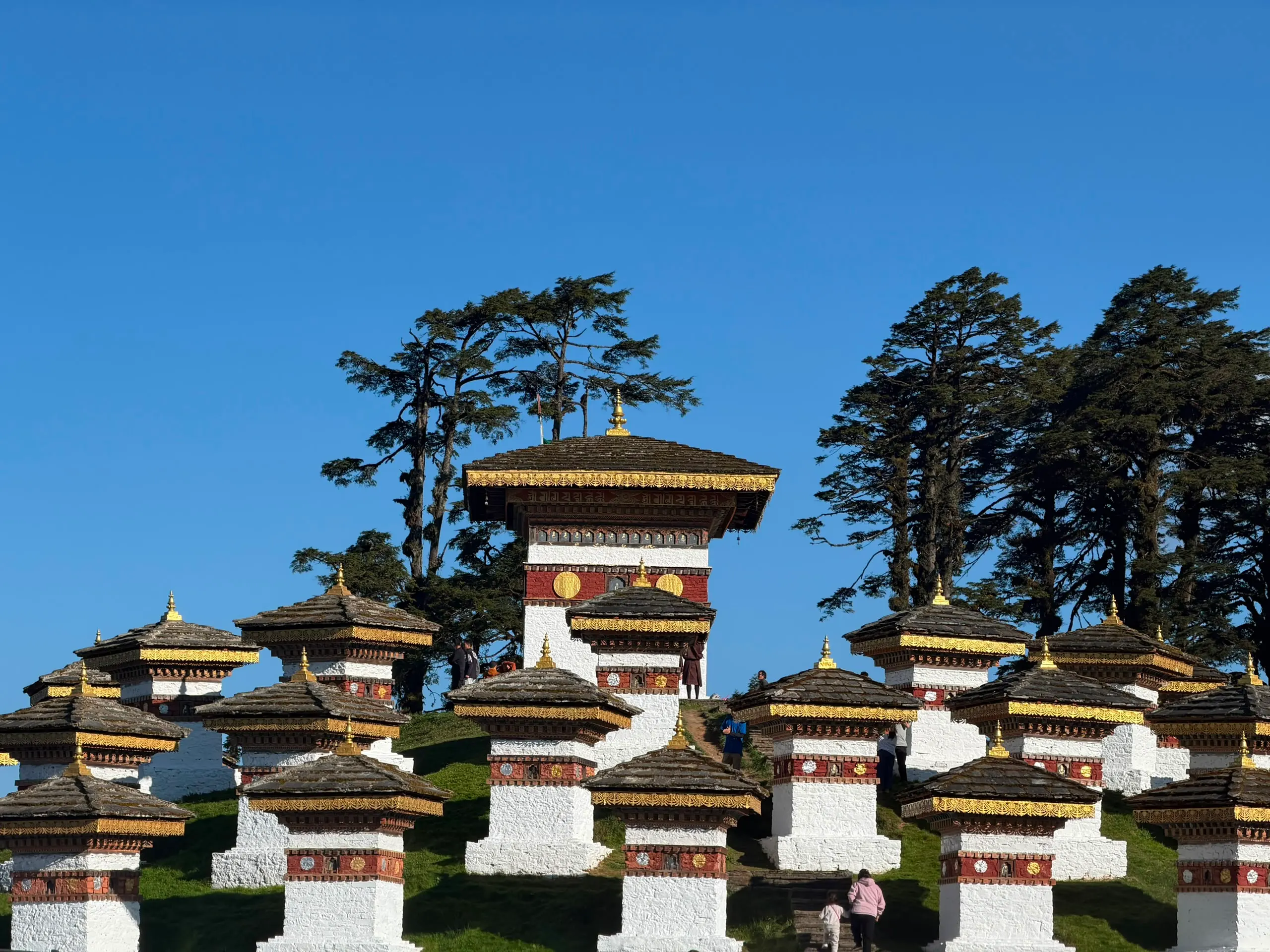
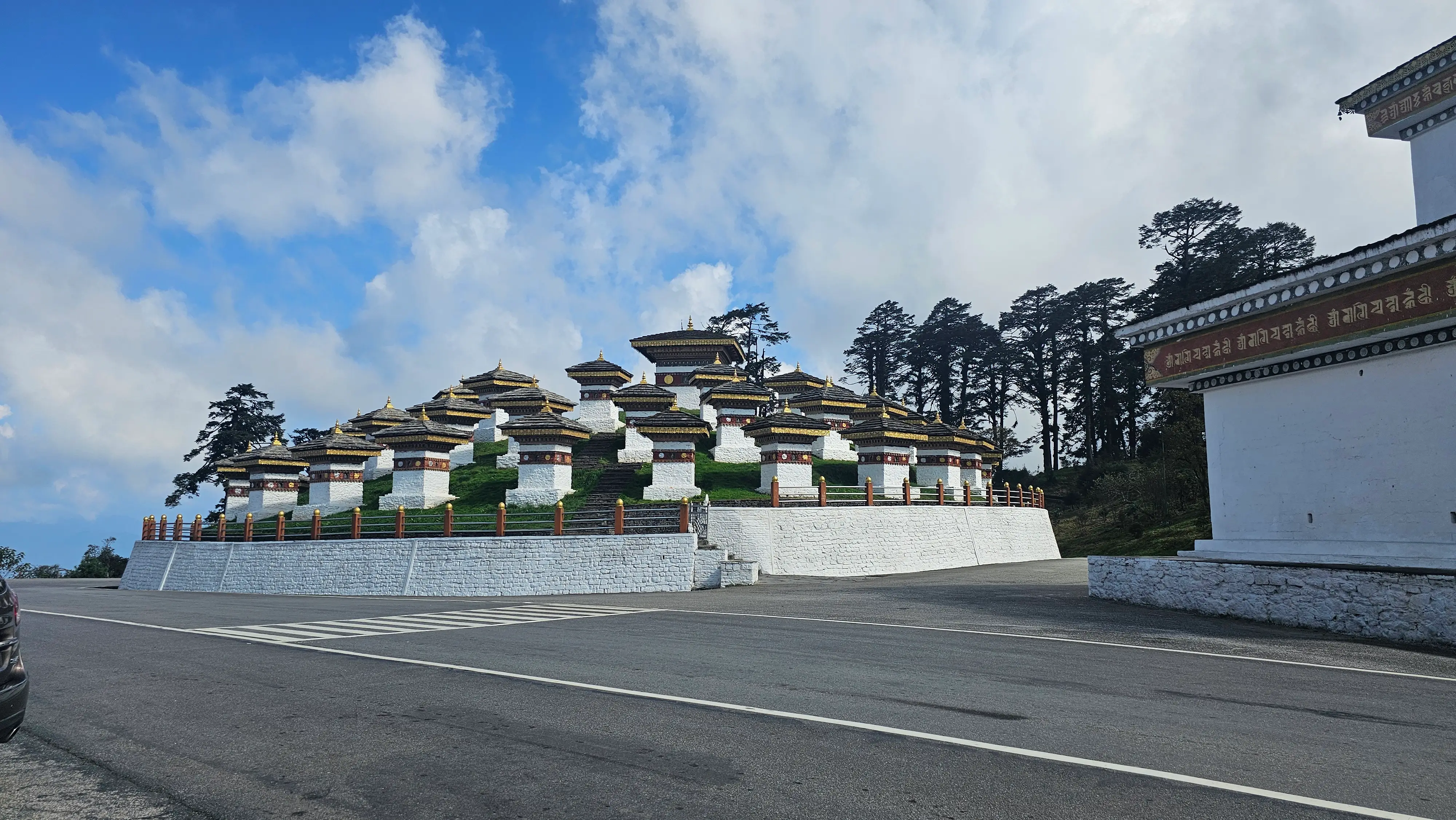
The 108 chortens at Dochula Pass, on the road east.See the journeys